Press Brake Technology for Accurate, Repeatable Bends
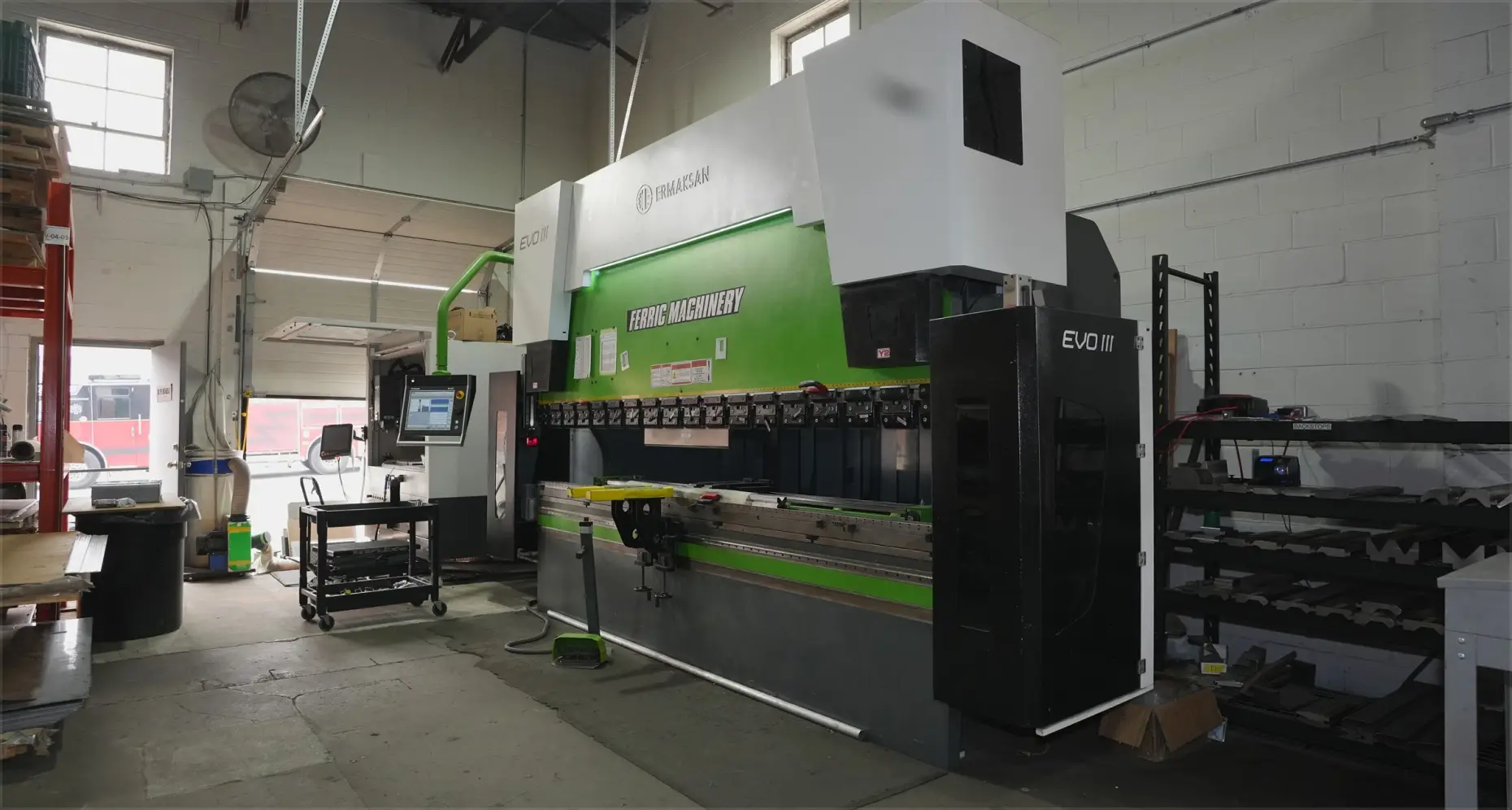
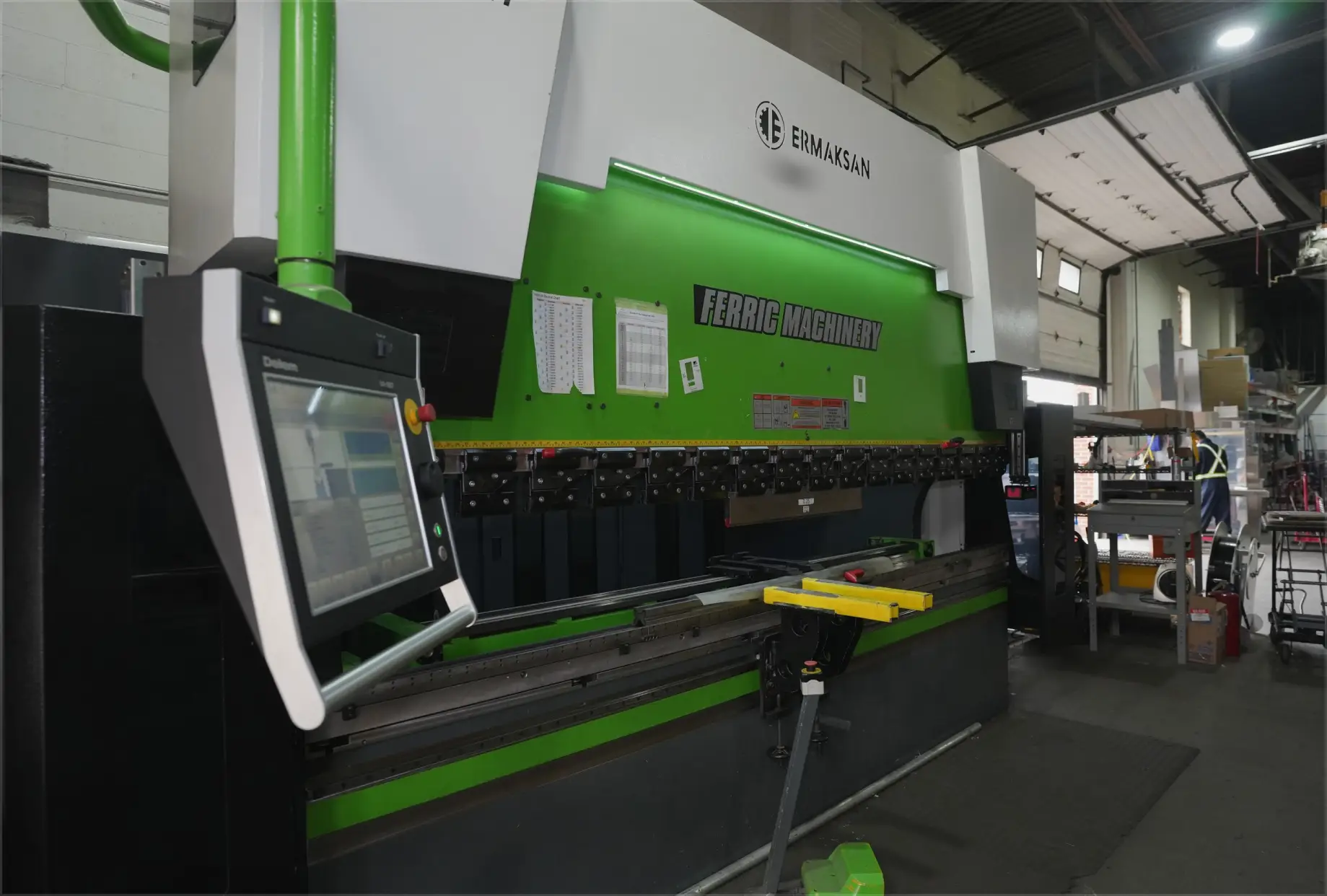
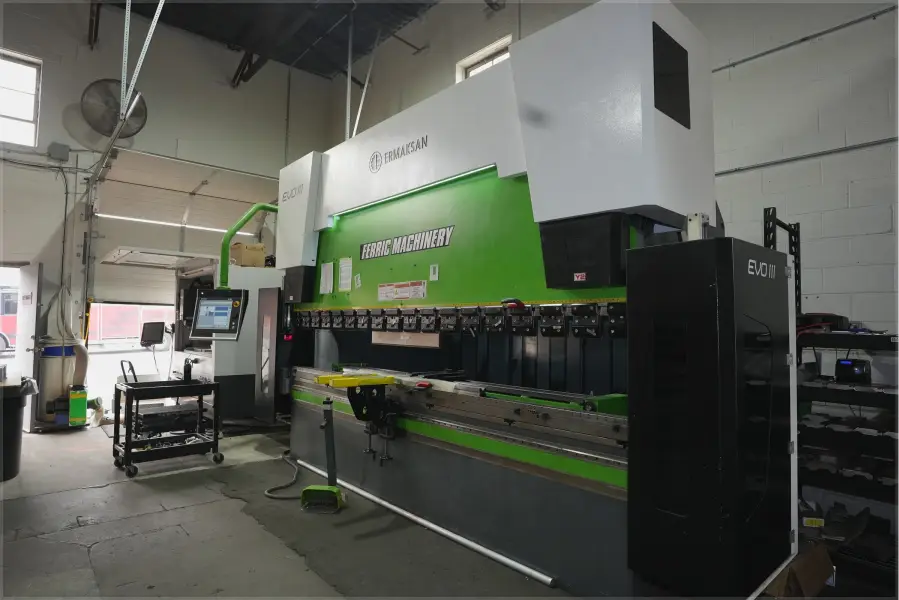
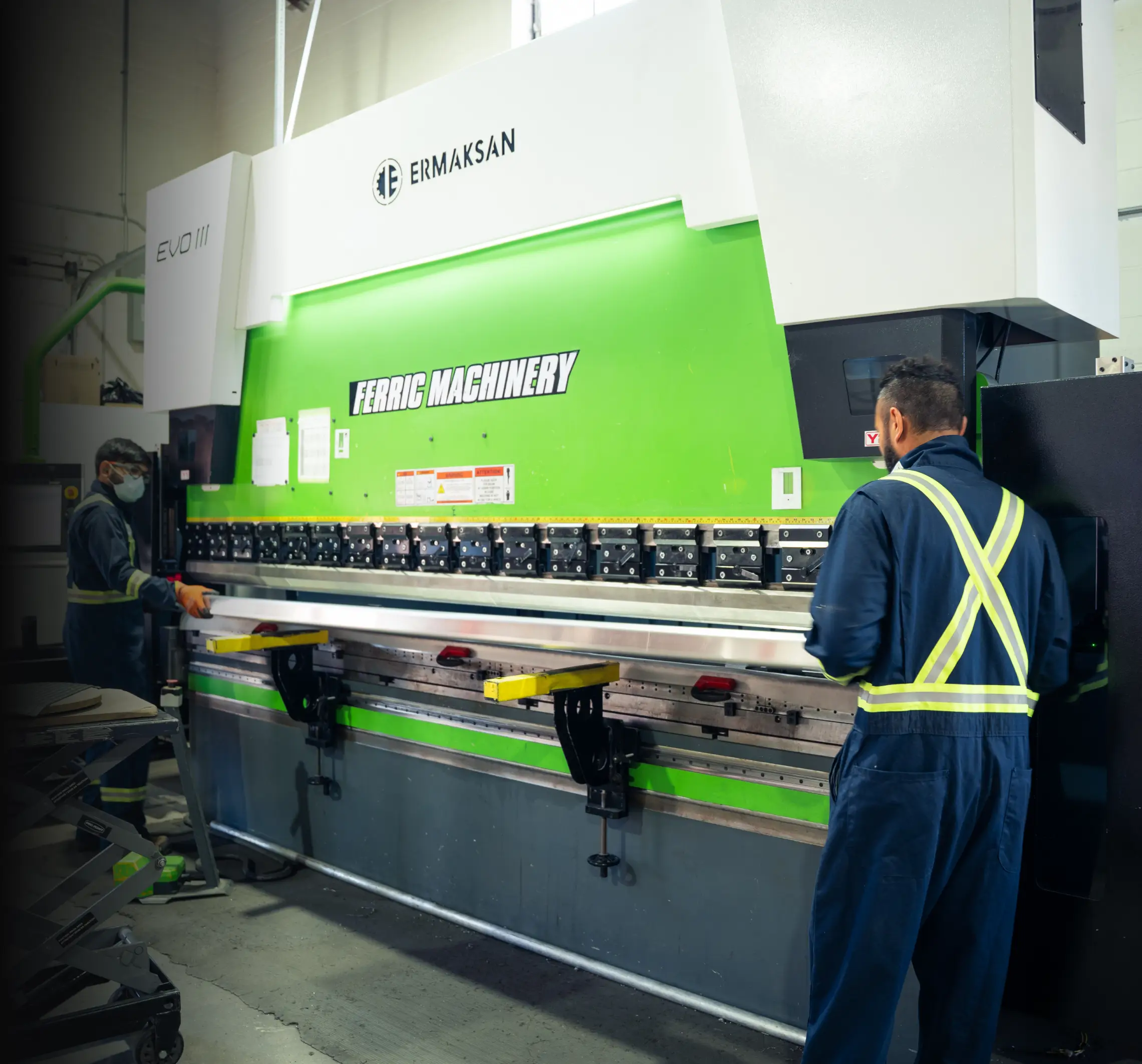
Our CNC press brake folds flat, laser-cut blanks into finished angles, channels, and enclosures in house, with bend angles held consistent from the first part in a run to the last.
What is Press Break Technology?
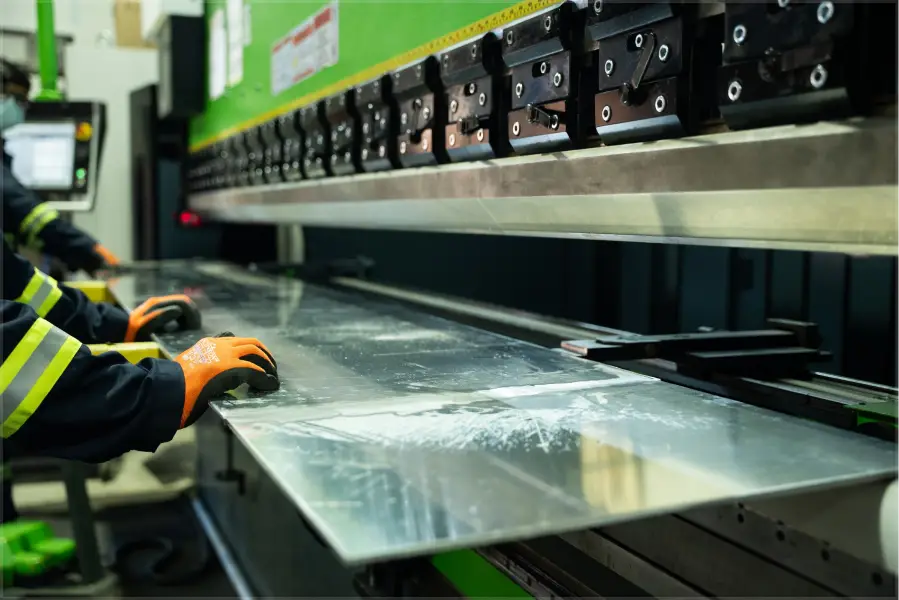
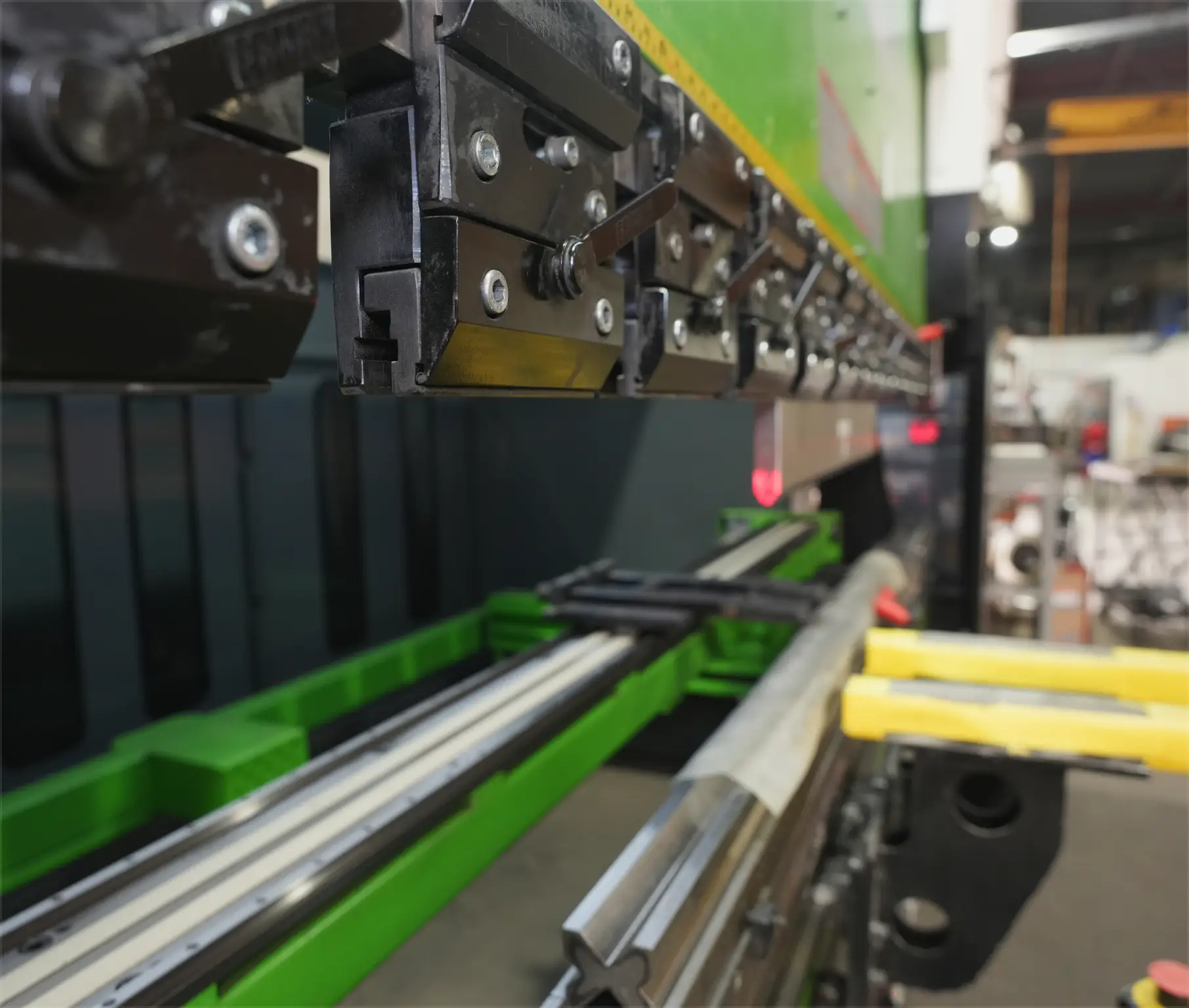
Press brake technology uses a machine fitted with a punch and die to fold flat sheet metal into shapes like angles, channels, and boxes. The sheet sits on a bottom die while the top punch comes down under hydraulic or electric power to make the fold. Computer controls handle back gauge position and ram depth, so every bend lands on the same mark.
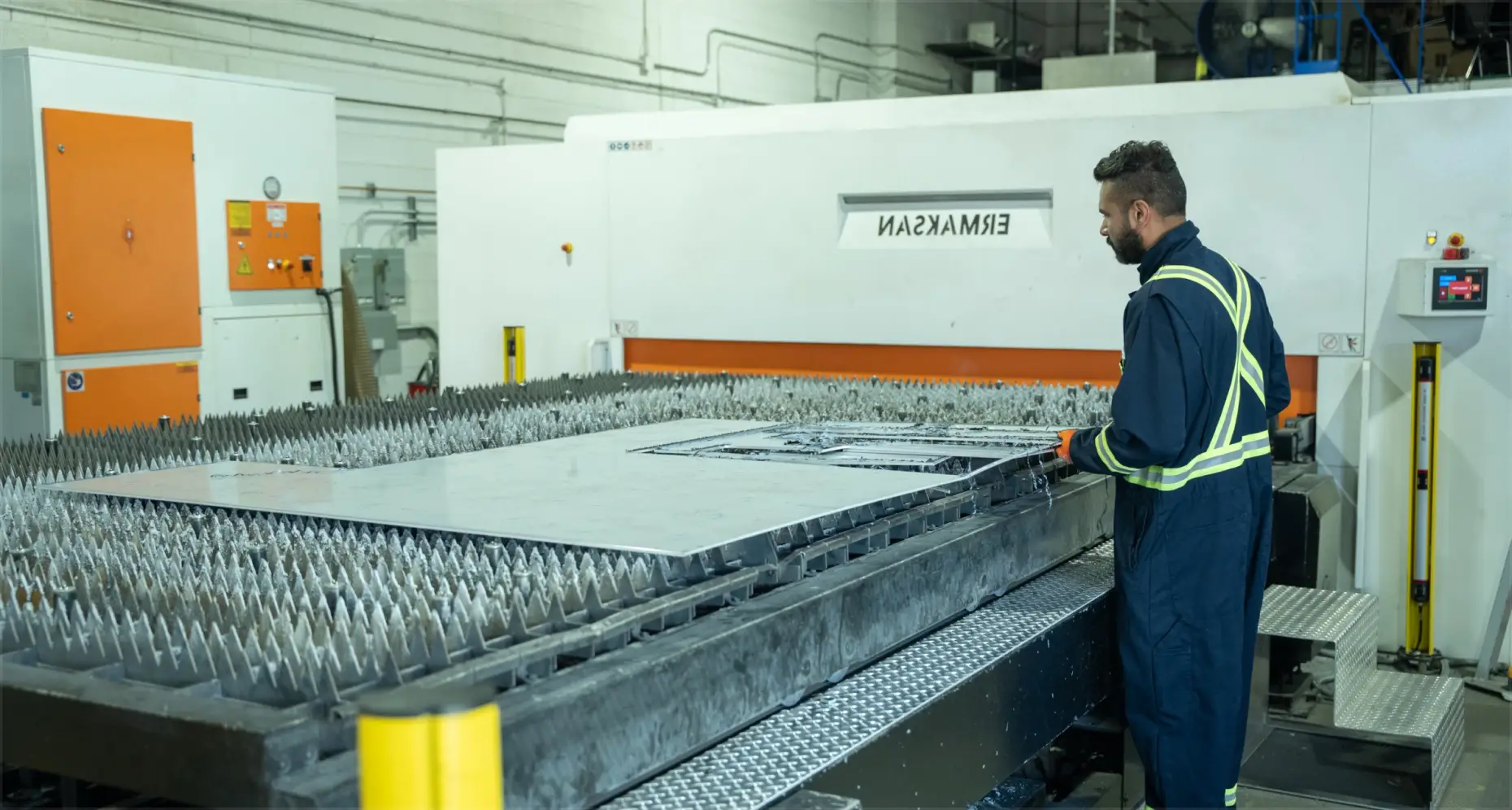
Our press brake machine sits between laser cutting and welding in our workflow. Blanks come off the laser, move to the brake for forming, then carry on to welding or finishing without leaving the building.
Machine Specifications
Our forming capacity is listed below. Confirmed material thicknesses are shown as ranges;
| Specification | Detail |
|---|---|
| Machine type and drive | CNC-controlled press brake system for precise, repeatable forming |
| Maximum tonnage | Production capacity suited to a wide range of sheet and plate forming applications |
| Maximum bend length | Supports a range of part sizes and bend configurations |
| CNC axes | CNC-controlled back gauge and forming movements for consistent bend positioning |
| Bend angle accuracy | Controlled through CNC programming, tooling selection, and material-specific setup |
| Back gauge repeatability | CNC positioning provides consistent bend location across production runs |
| Press brake tooling | A range of forming tools supports standard bends, tighter angles, and specialized part geometries |
| Steel | 22 gauge up to 3/4 in, depending on part geometry and forming requirements |
| Stainless steel | 22 gauge up to 1/2 in, depending on part geometry and forming requirements |
| Aluminum | 22 gauge up to 3/4 in, depending on part geometry and forming requirements |
Materials We Bend

Steel
Mild steel forms predictably and holds a bend well, which makes it the material behind most brackets, frame components, and structural parts we run. Springback is modest and easy to program for.

Stainless Steel
Stainless is stronger and springs back further than mild steel, so bends are overbent by a wider margin and inside radii are planned around the alloy and temper on the drawing. Marking is controlled through tooling selection and protective film.

Aluminum
Aluminum bends at lower tonnage but cracks more readily on tight radii, particularly in harder tempers, so die opening and bend radius are matched to the alloy before the job runs.
How the Process Works
File Intake
We review your 3D or flat file, confirm bend lines, angles, and material, then apply the correct bend deduction so the flat pattern cuts to the right size.
Programming and Tooling Setup
Bend sequence is programmed and verified before production. Press brake punch and die are selected by material, thickness, and geometry, and back gauge positions are set.
Bending
The first article is run and measured. Ram depth is adjusted for press brake springback, and the back gauge repositions automatically between bends on multi-bend parts.
Quality Check and Finishing
Angles and flange dimensions are checked against the drawing. Approved parts move straight to welding, finishing, or packing without leaving our shop.
Precision and Quality
Most of our press brake bending runs on air bending, with springback compensated in the CNC program using the actual material, thickness, and alloy on the drawing rather than one generic value applied to every part. A servo-driven back gauge repeats position across a full run instead of relying on an operator re-measuring by hand. Tooling is inspected on a set schedule, not after a bad part shows up. Because cutting, bending, and welding all happen here, tolerance is controlled at every stage instead of across three vendors.
Where Press Brake Forming Is Used
Our press brake technology support a wide range of industries, from fleet vehicle fabrication and automotive parts to industrial components and custom metal signage.
Trucking
Formed chassis brackets, frame rail components, and truck bed ribs that bolt on without grinding or forcing.
Automotive
Body panels, mounting tabs, and support brackets where repeat bend accuracy keeps assembly moving.
Manufacturing
Machine guards, frames, and equipment housings produced in batches with consistent angles part to part.
HVAC and Industrial
Ductwork transitions, plenums, and equipment enclosures formed from sheet stock.
Sign Making
Returns, backers, and formed channel letters that need clean, square edges.
Prototype Development
Single formed parts and short runs for fit checks before a design is committed to production.
Complementary Technology
Every formed part starts as a flat blank, which is why laser cutting and the brake work as one process here. Cut geometry, bend relief, and hole placement are checked together before the job starts, so parts do not arrive at the brake needing rework.
Gallery Teaser
Formed brackets, enclosures, and channel work from recent jobs.
FAQs
What is a press brake used for?
A press brake bends flat sheet or plate metal into a specified angle or shape, turning laser-cut blanks into enclosures, brackets, channels, and other formed parts.
What is the difference between a hydraulic and a CNC press brake?
Hydraulic describes the drive system that powers the ram. CNC describes the computer control layer governing ram depth, back gauge position, and bend programming. Many machines are both hydraulic press brakes and CNC press brakes at the same time.
What is a press brake springback and why does it matter?
Springback is the elastic recovery a part goes through after the punch releases pressure. Parts are intentionally overbent to account for it, since ignoring springback leaves a finished angle that does not match the drawing.
How precise is a CNC press brake back gauge?
A servo-driven press brake back gauge positions material to a fine, repeatable tolerance across an entire production run, which is more consistent than manual positioning by an operator.
Can the same file used for laser cutting also program the press brake?
Yes. A complete 3D file can carry both the flat cut geometry and the bend sequence and angle data a CNC bending machine program needs, which keeps a part consistent from the laser to the brake.
What is the difference between air bending, bottoming, and coining?
Air bending uses the least tonnage and offers the most flexibility but leaves more springback to manage. Bottoming presses the material further into the die for a more consistent angle. Coining fully seats the material under high force for the tightest, most repeatable angle with minimal springback.
Send Us Your Bend Drawing
Share your file and material, and we will confirm forming capacity, tooling, and turnaround before the job starts.