Advanced Laser Cutting Technology for Precise Metal Parts
The Technology Behind Our Laser Cutting
Laser cutting replaces mechanical blades with a concentrated beam of light. Guided by a digital CAD file, the beam melts and vaporizes material along a programmed path while high-pressure assist gas clears the molten metal out of the cut. Because nothing physically contacts the sheet, parts come off the table flat, without the edge burrs, mechanical stress, or distortion older cutting methods leave behind.
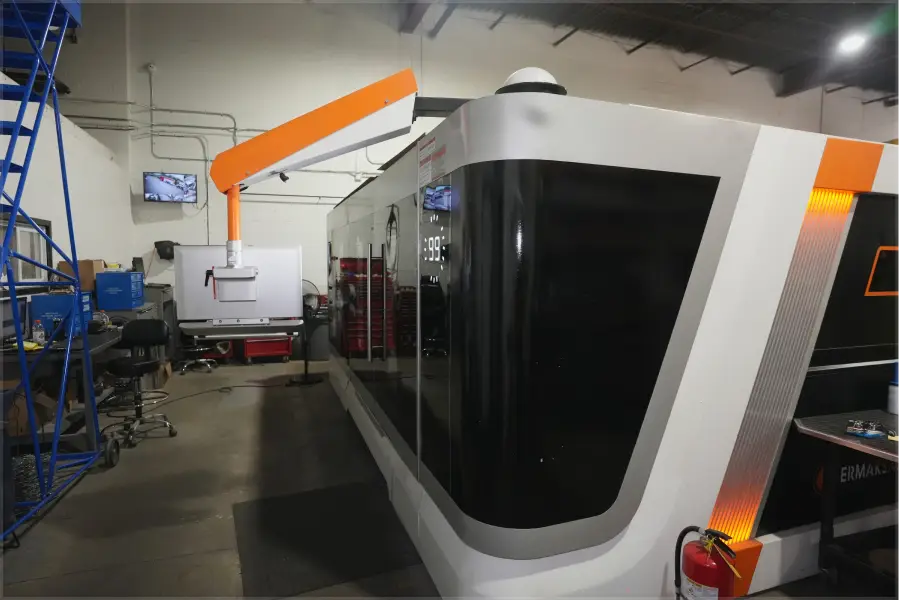
We run a CNC fiber laser, which sits at the front of our in-house workflow. Cut blanks move straight to forming and welding in our Brampton shop rather than shipping out to a second vendor.
Machine Specifications
Our fibre laser cutting system provides accurate, repeatable cutting across a wide range of metal materials and thicknesses. The exact cutting parameters can vary by material, geometry, and part requirements, so we confirm the appropriate settings as part of the quoting and programming process.
Specification | Detail |
Laser type | Fibre (solid-state) laser technology |
Laser wavelength | Approximately 1.06 micron |
Laser power | Configured for production cutting across a range of metal thicknesses |
Maximum bed size | Sized for efficient sheet processing and production cutting |
Cutting tolerance | Application-dependent; confirmed based on material, thickness, geometry, and required part tolerance |
Positioning accuracy | CNC-controlled positioning for consistent, repeatable part production |
Laser cutting kerf | Narrow kerf for precise profiles, efficient material use, and detailed internal features |
Assist gases | Nitrogen, oxygen, and compressed air, selected according to material and required edge condition |
Steel | 22 gauge up to 3/4 inch |
Stainless steel | 22 gauge up to 1/2 inch |
Automation | Production workflow supports efficient sheet handling and repeatable cutting |
Aluminum | 22 gauge up to 3/4 inch |
For applications with tight dimensional requirements, we review the material, thickness, geometry, and tolerance requirements before production to ensure the cutting process is suited to the part.
Materials We Cut
Our commercial metal laser cutting system handles the three most common sheet metal materials across the full range of gauges and thicknesses used in industrial and commercial fabrication.

Steel
Mild steel is the most common material through our machine, cut with oxygen assist on heavier plates for speed and with nitrogen where a cleaner, oxide-free edge is needed. We cut steel from 22 gauge up to 3/4 inch.

Stainless Steel
Laser cutting for stainless steel runs with nitrogen assist to keep the cut edge bright and free of oxidation, which matters on parts that stay unpainted. We cut stainless from 22 gauge up to ½ inch.

Aluminum
Aluminum reflectivity was historically a problem for older systems, but the shorter fibre wavelength is absorbed readily enough that aluminum is routine work here rather than a specialty job. We cut aluminum from 22 gauge up to 3/4 inch.
How the Process Works
File Intake
Send us a PDF or native SolidWorks file. We review geometry, confirm material and thickness, and flag anything that will not cut cleanly before quoting.
Programming and Tooling Setup
Parts are nested across the sheet to minimize offcut waste and shorten head travel. Cut sequence is set, and shared cut lines between adjacent parts save further material and time.
Bending
The laser cutting head follows the programmed path while a height-sensing system holds nozzle standoff steady. Assist gas is matched to the material to control edge quality.
Quality Check and Finishing
Parts are checked against the drawing for dimension and edge condition, then moved to deburring, forming, welding, or packing without leaving our shop.
Our Laser Cutting Precision and Quality is Unmatched
Laser cutting tolerances depend on material, thickness, and part geometry, so we confirm your requirement against your material before cutting rather than after.
A thinner gauge holds tighter tolerances than a heavy plate. The kerf is a fraction of a millimetre on thin material, which keeps small internal features and tight-radius corners achievable and reduces waste.
Nozzle standoff and calibration are maintained on schedule, since a few tenths of a millimetre of drift shows up visibly in edge quality. Cutting, forming, and welding all happen here, so tolerance is controlled across the whole part.
Where Laser Cutting Is Used
Our laser cutting technology support a wide range of industries, from fleet vehicle fabrication and automotive parts to industrial components and custom metal signage.
Trucking
Chassis brackets, mounting plates, and frame components cut to fit without secondary machining.
Automotive
Body panels, gussets, and bracket blanks where hole placement has to land right the first time.
Manufacturing
Machine guards, base plates, and equipment components produced in repeatable batches.
HVAC and Industrial
Duct blanks, transitions, and enclosure panels cut flat and ready for forming.
Sign Making
Letters, logos, and decorative profiles cut with clean edges that need little or no finishing.
Prototype Development
One-off parts and short runs, with no tooling cost and the same programming used for full production.
Complementary Technology
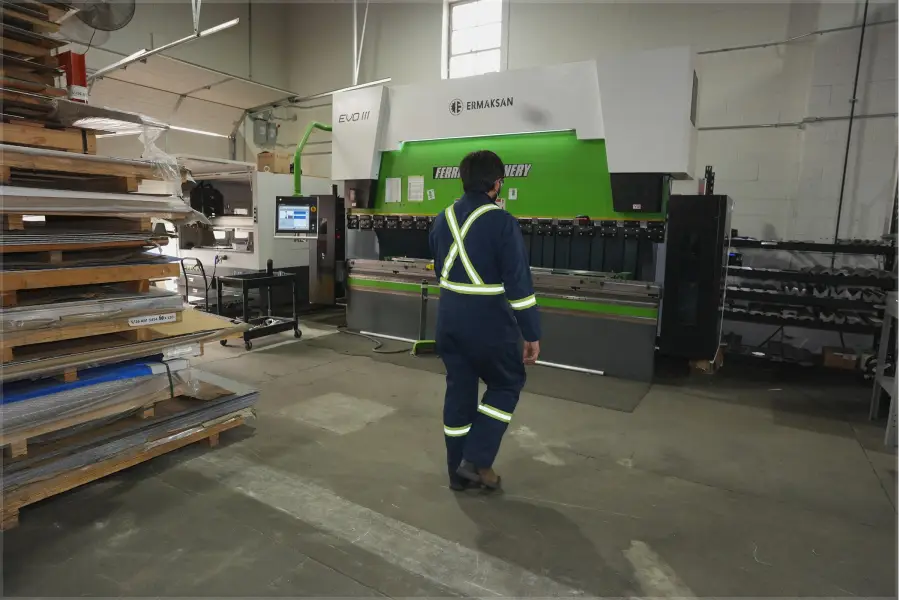
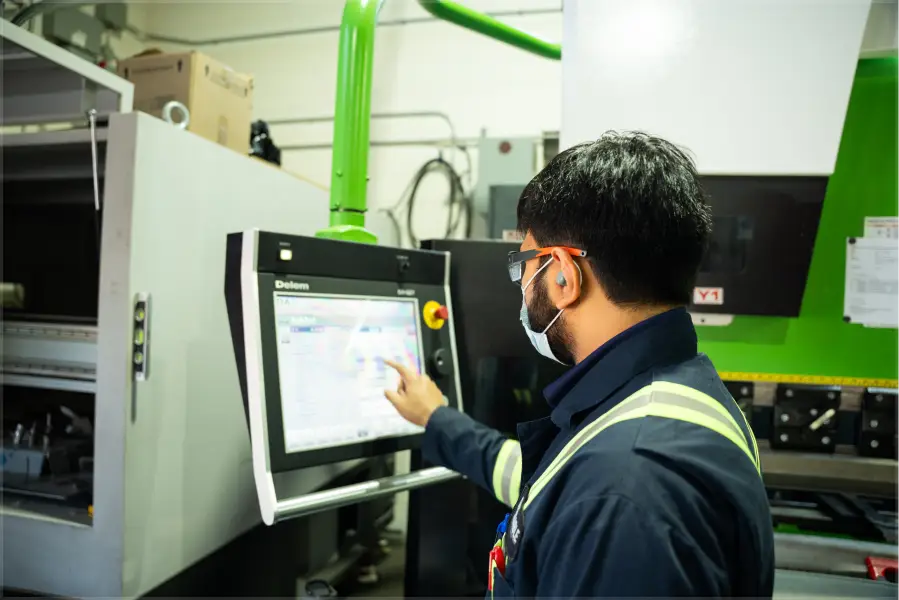
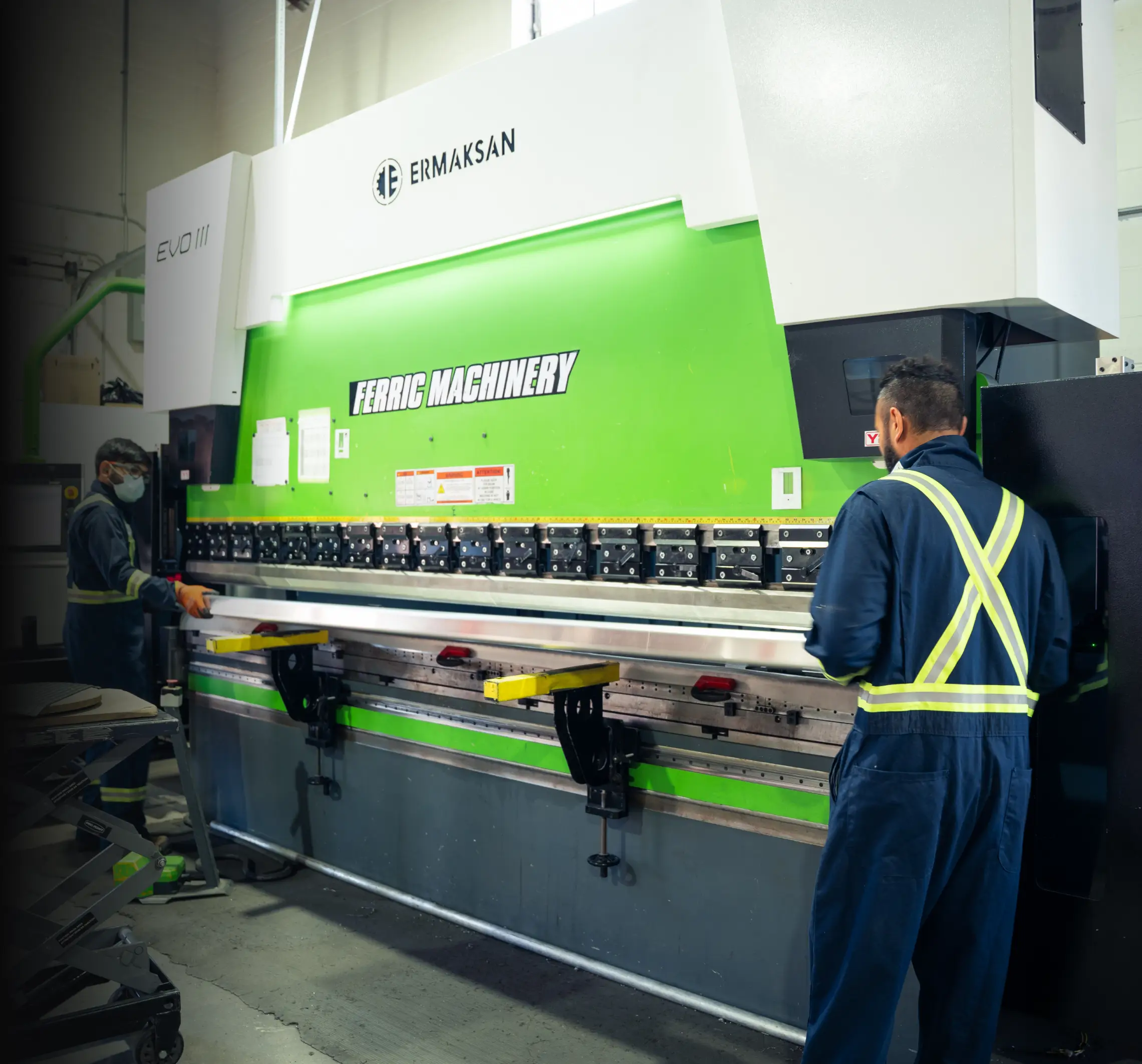
Most parts that come off our laser are not finished yet. Cut blanks move to our brake for forming, and bend allowance is accounted for in the flat pattern before cutting starts, so parts arrive at the brake ready to run.
Gallery Teaser
Formed brackets, enclosures, and channel work from recent jobs.
FAQs
How does laser cutting work at a basic level?
A focused laser beam melts and vaporizes material along a CNC-programmed path, while an assist gas clears molten material from the cut and helps protect the edge.
What is the difference between fiber laser and CO2 laser cutting?
Fibre lasers use a shorter wavelength that metal absorbs more efficiently, which means faster cuts, better performance on reflective metals, and lower operating cost than a comparable CO2 laser cutting system.
Is laser cutting more accurate than plasma cutting?
Yes, within a laser’s effective thickness range. Laser cutting vs plasma cutting comes down to precision and edge quality: laser holds tighter tolerances and cuts a narrower kerf, while plasma stays more practical on a very thick plate.
What tolerances can a fiber laser hold?
It depends on material and thickness, with thinner gauges generally holding tighter tolerances than heavy plates. Confirm your specific tolerance requirement against your material before cutting.
Can laser cutting handle both steel and aluminum equally well?
A fiber laser cutting machine handles both effectively. Aluminum reflectivity, historically a challenge for CO2 systems, is far less of an issue with fibre technology.
Send Us Your File to Get Started
Share your DWG, DXF, PDF or 3D file with material and thickness, and we will confirm cutting capacity, tolerance, and turnaround before the job starts.